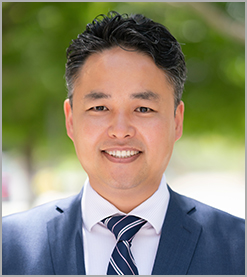
주성필 목사
이번 한국선교 140주년 역사비전탐방의 진한 감동이 아직도 깊은 여운으로 남아 있습니다. 한국 선교 역사에서 가장 특이한 점 두 가지를 꼽으라면, 선교사보다 성경이 먼저 들어온 것과 최초의 교회가 외국인 선교사가 아닌 한국인에 의해 세워졌다는 점일 것입니다. 140년 전인 1895년, 언더우드와 아펜젤러 선교사가 입국할 때 일본 유학 중이던 이수정을 만나 그가 번역한 마가복음을 들고 왔고, 이에 앞서 존 로스 선교사는 서상륜과 함께 1882년 최초로 우리말로 번역된 성경인 〈예수셩교 누가 복음젼서〉를 출판하였습니다. 그리고 이 성경을 비밀리에 보급하던 서상륜이 국경을 넘어 복음을 전하면서, 1883년 황해도 소래에 한국 최초의 교회를 세웠습니다.
비를 맞으며 걸었던 섬티아고 순례길의 그림 같은 아름다운 풍경들, 모처럼 맛본 갖가지 맛깔스러운 음식들, 잘 알려지지 않고 숨겨져 있던 믿음의 이야기들… 여러 가지가 마음에 담겼지만, 그중에서도 선교사 묘원과 묘비명은 잊을 수가 없습니다. 한국인보다 한국을 더 사랑했던 헐버트의 묘비에는 ‘웨스트민스터 사원보다 한국에 묻히고 싶다.’라고 적혀 있었고, 24살 처녀로 입국해 9개월 만에 소천한 루비 켄드릭은 ‘내게 줄 수 있는 천 개의 생명이 있다면, 나는 천 개의 생명을 모두 조선을 위해 바치겠습니다.’라는 묘비명을 남겼습니다. 의료와 선교를 병행하며 의사이자 목사로 살았던 오웬의 묘비에는 ‘Owen’이라는 그의 영문 이름 위에 ‘오목사’라고 적혀 있고, 손양원 목사의 삼부자 묘역 앞에는 “원수를 사랑하며 너희를 박해하는 자를 위하여 기도하라”라는 마태복음 5장의 성경 구절이 기록되어 있습니다. 주 예수께 받은 사명을 위해 생명조차 귀한 것으로 여기지 않았던 삶의 흔적들이 느껴졌습니다.
문득 내 삶의 끝자락에서 이 세상에 남길 마지막 한마디로 나의 묘비명을 적는다면 어떻게 적을까, 나의 삶을 추모하는 후손들은 나를 어떻게 회상하며 뭐라고 기록할까 하는 마음이 들었습니다. 여러분의 묘비명에는 어떤 글귀가 남아 있기를 원하시는지요? 요즘 사도행전으로 큐티를 하고 있는데, 제자들은 안디옥에서 비로소 그리스도인이라 일컬음을 받게 되었습니다. 누가 보아도 그 삶이 그리스도께서 주인 되시고 다스리시는 삶이었다는 말이겠지요. 어쩌면 순교의 삶을 살다 간 선교사들은 선교사이기 전에 그리스도인으로 부름을 받았고, 사명을 따라 충성되게 그리스도인으로 살아가다가 순교의 자리까지 간 것이겠지요. 우리 역시 수많은 사람 중에서 특별하게 그리스도인으로 부름을 받아 오늘 이 땅을 살아가고 있습니다. 그렇다면 마지막 묘비명에 ‘나는 그리스도인이었다.’라고 고백하며, 누가 보아도 그리스도인이라고 적힐 만한 삶을 살아가는 것만큼 보람되고 귀한 인생은 없지 않을까요? 묘비명–그리스도인으로 이 땅을 살다가 하나님 나라로 부름을 받아 이사 간 OOO.
Epitaph — Christian
Rev. Peter Joo
The deep emotion from this 140th Anniversary Historical Vision Trip of Korean Missions still lingers in my heart. Among the many impressions left upon me, two stood out most clearly: first, that the Bible entered Korea before the missionaries, and second, that the first Korean church was established not by a foreign missionary, but by a Korean believer. In 1895, 140 years ago, when missionaries Underwood and Appenzeller entered the country, they met Lee Soo-jung, who had been studying in Japan, and brought with them the Gospel of Mark. But even before that, in 1882, missionary John Ross, together with Seo Sang-ryun, had published The Book of Luke of Jesus Christ — the first portion of the Bible translated into the Korean language. Seo Sang-ryun, who secretly distributed this Bible, crossed the border preaching the gospel, and in 1883 established the first Korean church in Sorae, Hwanghae Province.
While walking under the rain along the Sum-tiago pilgrimage trail, I carried with me many memories — the flavorful foods we enjoyed after a long day, and the little-known, hidden stories of faith. Many of these remain quietly treasured in my heart, but among them, the missionary cemetery and its epitaphs are truly unforgettable. On the tombstone of Homer Hulbert, who loved Korea more than the Koreans themselves, are inscribed: “I would rather be buried in Korea than in Westminster Abbey.” Ruby Kendrick, who came to Korea as a 24-year-old young woman and passed away after only nine months, left behind this epitaph: “If I had a thousand lives to give, Korea should have them all.” On the tombstone of Owen, who lived as both a doctor and a pastor, uniting medicine and mission, the Korean phrase “Oh Mok-sa” (Pastor Oh) is written above his English name, “Owen.” And before the grave of Pastor Son Yang-won and his two sons is inscribed from Matthew 5: “Love your enemies and pray for those who persecute you.” In all these, one can sense the traces of lives that did not consider their own lives dear, for the sake of the mission entrusted to them by the Lord Jesus.
Then suddenly, I thought — if at the very end of my life I were to write my final words to leave in this world as my epitaph, how would I write them? How would my descendants, remembering my life, recall me and record it? What words would you wish to remain on your own epitaph These days, as I spend my Quiet Time in the Book of Acts, I read that the disciples were first called “Christians” in Antioch. That means that whoever looked at them could clearly see that their lives were ruled by and belonged to Christ. Perhaps those martyred missionaries — before they were ever called missionaries — were first called Christians, and they faithfully lived as Christians according to their calling, even unto the place of martyrdom. We too, among countless people, have been specially called as Christians and are living today on this earth. Then wouldn’t there be nothing more precious and meaningful than to live such a life that, on our final epitaph, we could confess, “I was a Christian,” and that anyone who saw it could say, “Indeed, this was a Christian”? Epitaph: Having lived on this earth as a Christian, and having been called to move to the Kingdom of God — (name).